
Why Most People Avoid the Raise Conversation — and What It Costs Them
Research consistently shows that most people have never asked for a raise — even when they felt they deserved more. The reasons vary: fear of rejection, fear of seeming greedy, uncertainty about whether "now is the right time." And more often than not, that hesitation just continues year after year. There's another reason: many people genuinely believe that good work "speaks for itself" and the manager will offer a raise when the time is right. But in reality, most managers are busy people who respond to direct requests — they're not tracking who hasn't had a raise in a while. Silence is usually read as satisfaction with the status quo. The cost of avoiding the conversation isn't just financial. A person who goes years without asserting their value gradually starts to feel overlooked. That affects motivation and the way they relate to their work overall.
How to Know When the Timing Is Right
Not every moment is equally suited for a raise conversation. A few signals that the timing works in your favor. Good timing: you recently wrapped up a meaningful project with strong results; you've received specific praise or recognition for a contribution; the company is in a relatively stable financial period; your manager is in a good headspace and not overwhelmed with urgent matters. Poor timing: the company is going through layoffs or financial strain; your manager is in a high-pressure stretch — deadlines, reviews, crises; you've just made a significant mistake or been in a conflict. Also look out for any formal salary review cycles your company runs. Requesting a conversation two months before the annual review is a much stronger position than asking a week after it's already happened.
What to Prepare Before Talking Money: Facts Instead of Requests
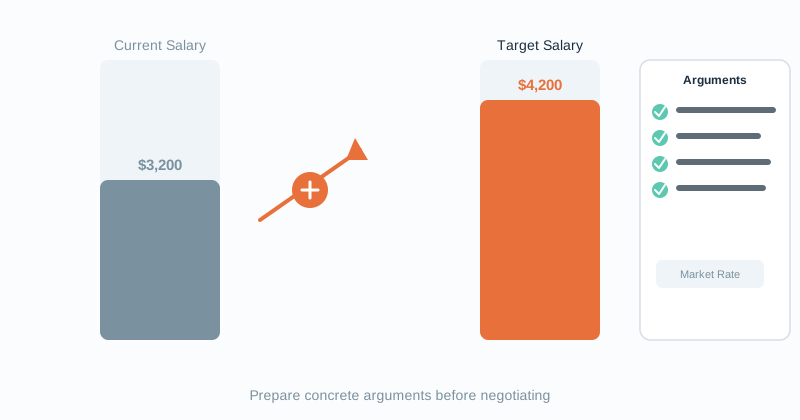
A raise conversation isn't a plea. It's a business conversation where you're proposing to adjust compensation based on concrete facts. That difference in tone is everything. What to prepare. First, a specific list of what you've accomplished over the past year — not duties, but results. Completed projects, process improvements, new responsibilities you've taken on. Second, a market reference point: what similar roles are paying in your city or field. You can check open job postings, ask colleagues, or consult professional compensation resources. Third, a clear number: how much you're asking for. Not "I'd like more," but a specific figure or range. A direct ask lands far more convincingly than a vague wish. And one more thing: prepare for a possible "not now" — think through what would feel like a worthwhile outcome of this conversation even if the raise doesn't happen immediately.
How to Stay Composed Even If the Answer Is No
Sometimes the preparation is done, the timing is right, the arguments are solid — and the answer is still "no" or "not right now." That's frustrating, but it's part of the process. How to handle it. First: don't react immediately. If you're irritated, don't show it. Thank them for their honesty and say you'd like to better understand the situation. Second: ask specifically. "What would need to happen for this to become possible?" and "When could we revisit this?" — that will give you either a clear benchmark or an honest read on whether there's any real path forward. Third: don't turn a single "no" into a personal grievance. A denial of a raise isn't a judgment of your worth as a person. It's a business decision influenced by many factors that may have nothing to do with the quality of your work. And if you've understood that even strong performance won't change the outcome here — that's important information for your next steps.
What to Do If a Raise Isn't Coming — and Isn't Even Being Considered
Sometimes "no" doesn't mean "not yet" — it just means no. The company isn't planning raises, the budget is frozen, or the manager doesn't see the basis for one. If this happens after an honest conversation where you laid out concrete arguments and couldn't get a clear explanation of what needs to change — stop and assess the situation calmly. Are your expectations aligned with what the company is actually able and willing to offer? If the gap is large and the outlook isn't improving, that's a signal to start exploring other options. That's not betrayal or ingratitude — it's a rational decision. On the other hand, if you were given specific conditions ("in 6 months, once we launch this project"), get them in writing and track them. Verbal agreements without documentation have a way of being forgotten.
How Not to Damage Your Relationship With Your Manager After a Tough Conversation
A conversation about money can be uncomfortable, but it doesn't have to leave tension in its wake. A few principles that help preserve the relationship regardless of the outcome. Never make ultimatums you're not prepared to follow through on. "If you don't give me a raise, I'll leave" — that's a serious statement, and if you say it but don't follow through, your leverage is permanently diminished. Second, don't share the details of the conversation with colleagues. Even if you're close with someone on the team, these things tend to travel in ways that create complications. Third, after the conversation, carry on exactly as you did before — bring the same level of effort to your work, don't signal resentment. Managers value people who can have direct conversations without turning them into a drama. That kind of maturity, by the way, is itself something that can improve your chances the next time around.